ITIL® 5 in 3 minutes
The basics
ITIL® is the most widely accepted approach to IT service management in the world; it focuses on aligning IT services with the needs of the business.
Summary
ITIL was created in the 1980s by the UK government’s CCTA (Central Computer and Telecommunications Agency) with the objective of ensuring better use of IT services and resources.
ITIL is now owned by PeopleCert: the current version is ITIL 5 (published February 2026), which replaces ITIL v4/2020.
ITIL focuses on aligning digital products and services with the needs of the business and its customers and is supported by quality services from a wide range of providers including examination institutes, accredited training providers and consultancies, software and tool vendors. ITIL provides a structured approach to one of the most important support domains for modern business: the provision of digital products and services for the improvement of business results. The new ITIL version supports modern ways of delivering value in a co-creation effort of stakeholders, using an Agile approach in a complex and customer-focused setting. This supports modern technologies, including DevOps, cloud computing and AI.

Figure 1: The ITIL value system (ITIL Foundation, Figure 1.7, “ITIL value system”)
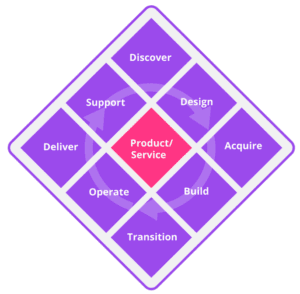
Figure 2: The ITIL digital product and service lifecycle model (ITIL Foundation, Figure 1.6, “ITIL digital product and service lifecycle model”)
Target audience
Digital product- and service providers and professionals in a wide range of roles.
Scope and constraints
The ITIL value system (Figure 1) is a model demonstrating how all the components and activities of an organization work together to facilitate value creation through digital technology enabled services. The ITIL digital product and service lifecycle model (Figure 2) is a set of interconnected activities that an organization performs to deliver a valuable product or service to its colleagues and consumers and to facilitate value realization. It provides an operating model for
digital product- and service providers that covers eight key activities, applying practices to continually improve the enabled values.
Strengths
• Universally accepted as the good practice guidance for IT Service Management, with service and value focus
• Extended with digital products through a lifecycle model that helps coordinate activities around products and services that are often managed separately.
• Supported by a vast community of ITIL practitioners, gathered around itSMF (IT Service Management Forum)
Constraints
When implementing ITIL-based practices for managing digital products and services, the most common pitfalls are:
• Narrow focus on the IT Unit’s technology and process perspectives to gain incremental improvements; the organization should be embarking on a radical transformation to run digital technology as a business
• Failing to do an assessment before implementing ITIL practices; identifying how the current organization structure compares to the ITIL framework and the changes that will be needed to the organization and its culture
• Short term expectations; it is not a quick fix, achieved with just a handful of personnel trained and the purchase of some ITIL tools