BISL Business Information Management
What Does an Application Manager Actually Do?
An application manager keeps software running, maintained, and up to date. This role sits on the supply side of IT, separate from business information management, which represents the business itself. According to the BiSL framework, application management covers the design, development, maintenance, and renewal of applications and their underlying database structures.
What Is Application Management, Exactly?
Application management is the IT service responsible for keeping software applications alive over time. The BiSL glossary defines it plainly: “Applicatiemanagement — Dienstverlening die gericht is op het beheer, onderhoud en vernieuwing van applicaties.” In everyday terms, that means managing, maintaining, and renewing the applications people use to do their work.
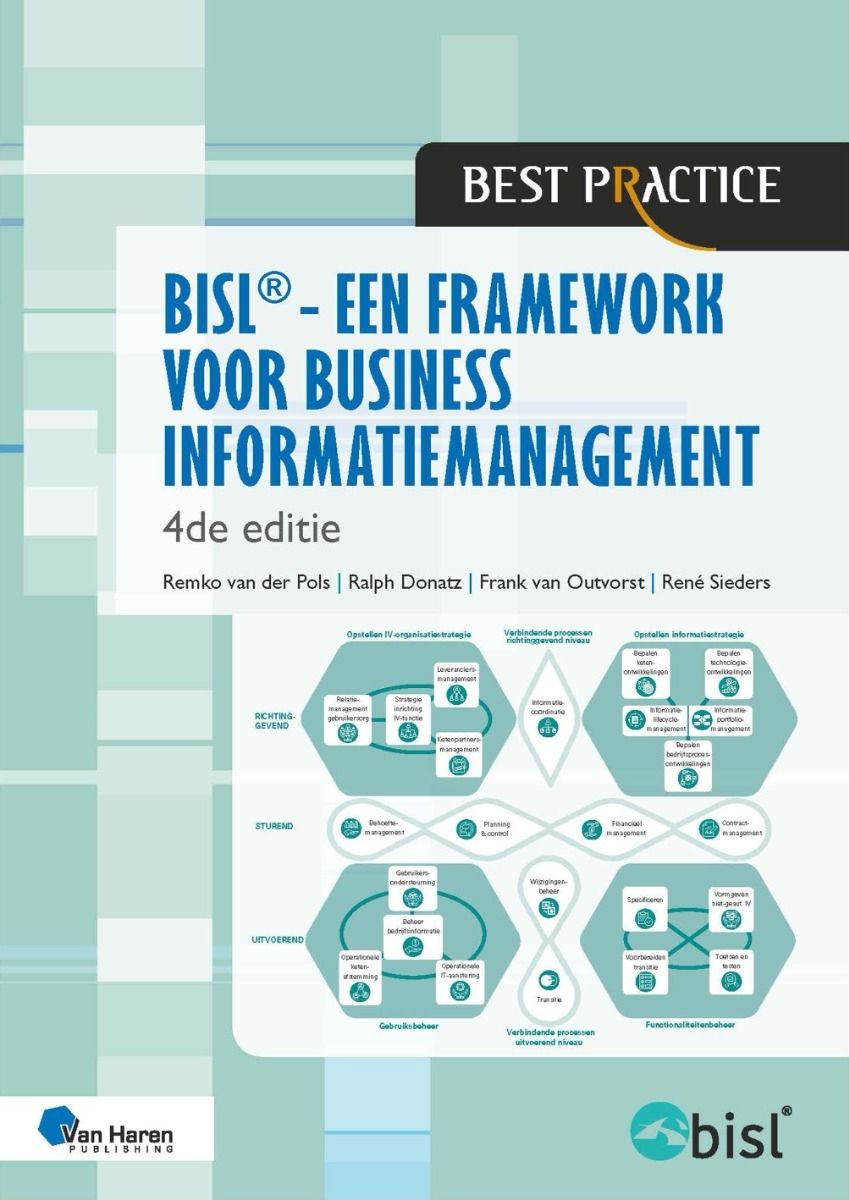
This definition comes from the appendix of BiSL – Een framework voor business informatiemanagement, 4th edition, where the authors carefully separate the demand side of IT from the supply side. Application management sits on the supply side, next to IT infrastructure management. Together these two functions form what the book calls the IT-aanbodkant: the party that builds and operates technology, rather than the party that decides how the business should use it. Business information management, described throughout the rest of the book, represents that demand side instead.
Where Does Application Management End and Business Information Management Begin?
Application management handles the technical side of software: keeping it running, fixing errors, and installing updates. Business information management instead focuses on how the business actually uses that software within its processes. The line between the two isn't theoretical — BiSL draws it through everyday examples of user reports reaching the helpdesk.
Take two typical helpdesk messages. As the book puts it: “Meldingen als: ‘De applicatie start niet op’ en: ‘Windows blijft hangen’, horen niet thuis bij BIM maar bij applicatiemanagement en IT-infrastructuurmanagement.” A report that an application won't start is technical, so it belongs with the application manager. A question such as how to correctly enter an insurance policy is functional, so it stays with business information management. The same helpdesk may log both messages, but what happens behind the scenes differs completely, because each question calls for a different kind of expertise.
Why Are Application Management and IT Infrastructure Management Kept Apart?
These two supply-side functions are split because they solve different problems. Application management is responsible for the software itself: its design, development, and ongoing maintenance. IT infrastructure management instead keeps the hardware, networks, and technical environment running, so that applications and systems stay available to users.
The distinction matters because a business rarely wants a single supplier juggling both concerns without clear accountability. According to the book, application management covers the design, development, and upkeep of application software, including the design of files and database structures. IT infrastructure management, meanwhile, keeps computers, printers, and networks working, and makes sure information systems stay online. Splitting these responsibilities lets each side specialise, while business information management coordinates both from the demand side.
How Does Application Management Relate to ASL and ITIL?
Application management is closely tied to ASL, a framework built specifically for managing and maintaining software. ITIL, by comparison, covers IT services more broadly, including infrastructure. Both frameworks describe overlapping processes, such as change management, but their scope and depth differ, and that difference is exactly what keeps them apart.
ASL emerged in the Netherlands during the 1990s, developed specifically as a framework for the management and maintenance of software. The core distinction, as the book states, remains simple: “ASL gaat specifiek over het beheer en onderhoud van software terwijl ITIL meer algemeen op (IT-)services gericht is.” BiSL followed later, first published in 2005, and complements both frameworks rather than competing with them. It addresses the demand side and the business perspective, while ASL and ITIL stay firmly on the supply side of IT.
When Do You Actually Need an Application Manager?
You need an application manager whenever software must be built, changed, or kept running to match business needs. This covers running impact analyses before a change, developing or adjusting the application itself, and maintaining its underlying design once business information management has defined what the business actually requires.
The handoff between the two sides is deliberate, not accidental. As the book explains: “Het ontwerp, het beschrijven van de geautomatiseerde oplossing valt dus buiten het verantwoordelijkheidsdomein van business informatiemanagement. De specificaties van BIM vormen de basis voor het (aanpassen van) het ontwerp.” In other words, business information management defines what is needed, and the application manager decides how to build or adjust it. That division keeps each role focused on what it does best, and prevents the business from being pulled into technical design decisions it isn't equipped to make.
Two Sides, One Goal
Application management builds and maintains the software; business information management decides what the business actually needs from it — together they keep information provision running.
ways to learn about our BISL standard


Request a quote from a training partner
Frequently asked questions
Not in detail. BiSL centres on business information management, the demand side of IT, and mentions application management mainly to mark where its own responsibilities end. For a detailed treatment of an application manager's daily work, the ASL framework is the more relevant source, since it was developed specifically for managing and maintaining software.
An application manager works on the supply side, handling the technical design, development, and maintenance of software. A business information manager works on the demand side, translating business needs into specifications and deciding how IT should be used. One builds and maintains; the other decides what is actually needed.
No. Application management focuses on software: its design, development, maintenance, and database structures. IT infrastructure management focuses on hardware, networks, and the technical environment that keeps systems available. Both sit on the IT supply side, but they cover different layers of the same technology stack.